Why protected bike lanes are more valuable than parking spaces

SHORT FILM

Vox, 5 September 2018

Data shows that the 9th Avenue bike lane produced economic, mobility and safety benefits. “We saw crashes go down, some 47%, retail sales went up almost 49%, cars dad dedicated turn lanes so the traffic processed much better, and bikes had a dedicated lane. So it was a win for business, it was a win for drivers, it was a win for people on foot and it was a win for people on two wheels, and that really set the stage for all that followed.”


See just how much of a city’s land is used for parking spaces

ARTICLE / TOOL

Adele Peters, Fast Company, 20 July 2017

At the moment, cars spend around 95% of the time parked, and only 5% of the time in use. Huge swaths of cities, either in parking lots, garages, or street parking spaces, are used as storage for cars (while, at the same time, many cities struggle to find enough land to build housing to keep up with demand). “There’s this huge space that’s basically wasted,” says Szell.

The high cost of free parking

ARTICLE / SHORT FILM

Will Chilton and Baird Bream, vox.com, Jul 19, 2017

Off-street parking requirements, really, spread throughout the United States faster than almost any other urban planning invention. They arose partly because of the lack of management of on-street parking. If you can’t manage the on-street parking properly you need off-street parking requirements or everybody will say, ‘How could you let this building be built when there’s not enough parking?

To boil an 800 page book down into three bullet points, I have three basic recommendations:

Remove off-street parking requirements.

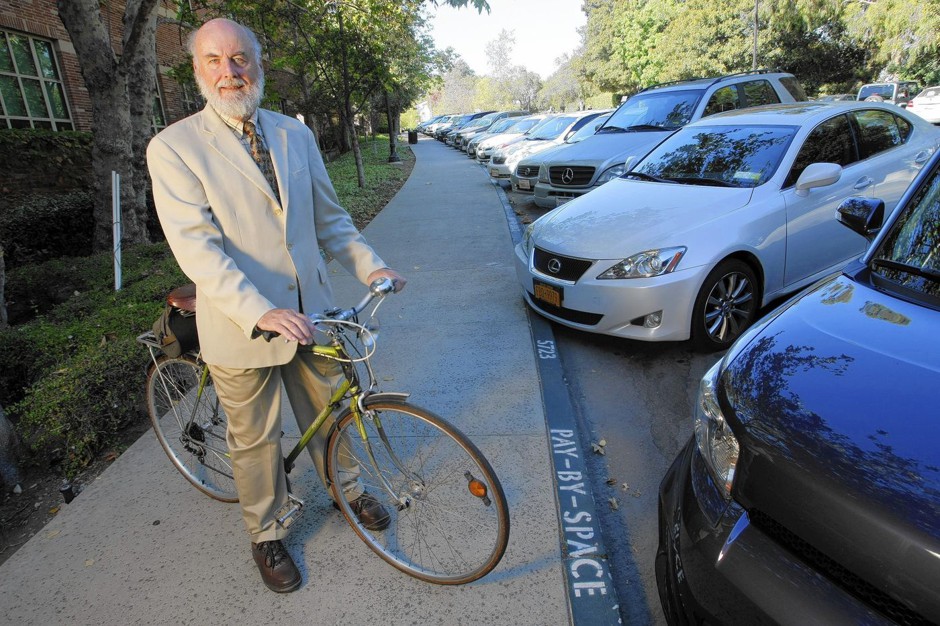
Charge the right price for on-street parking. By which I mean the lowest price the city can charge and still have one or two open spaces on every block, so nobody can say there is a shortage of parking. In order to reach that price you have to vary it by location and time of day.

But you have done that, make it politically popular, and spend the revenue on public services on the metered streets.


To visit Donald Shroup’s website click here, for CityLab’s profile ‘Parking Is Sexy Now. Thank Donald Shoup’ click here.

A developed country is not a place where the poor have cars. It’s where the rich use public transportation. 

Gustavo Petro, mayor

Top ten design elements that make Copenhagen bicycle-friendly

SHORT FILMS

Copenhagenize Design Co., 8 Dec 2016

#01 The Big Picture – uniformity of bicycle network 

#02 The Green Wave for Cyclists – cyclist orientated traffic signalling  

#03 Intermodality – cycling integrated into all public transport options 

#04 Safety Details – design of traffic flow, stop line for cars, traffic lights, bus drop offs, use of rumble strips 

#05 Nørrebrogade – redesign of city artery 

#06 Macro Design – showcase projects that increase cycling network 

#07 Micro Design – tiny details that improve quality of cycling network 

#08 Cargo Bikes – 40,000 cargo bikes in Copenhagen 

#09 Desire Lines – urban design reflects how people actually use (or want to use) the city 

#10 Political Will – people in positions of responsibility who understand how to design a city for people


To learn more about Copenhagenize Design Co. and their work developing bicycle mobility networks click here.

Brooklyn bridge study sizes up expansion

SHORT FILM

New York Times, 17 August 2016

It’s a good problem to have right? Bicycling is now a mainstream mode of transportation in New York City. Almost a million New Yorkers now are riding their bikes regularly. And we should be providing for cycling as we provide for motoring in New York City.

Brand New Subway

GAME

Brand New Subway, July 2016

It’s an interactive transportation planning game that lets players alter the NYC subway system to their heart’s content. Players can choose to start from scratch or one of several NYC subway maps (including present-day, maps dating back to the early 1900s, or maps from the future). They can build new stations and lines to expand the system to new areas, or tear it down and redesign the whole thing.

Lee Kuan Yew World City Prize 2016 Laureate: Medellín

SHORT FILM

Lee Kwan Yew World City Prize, 2016

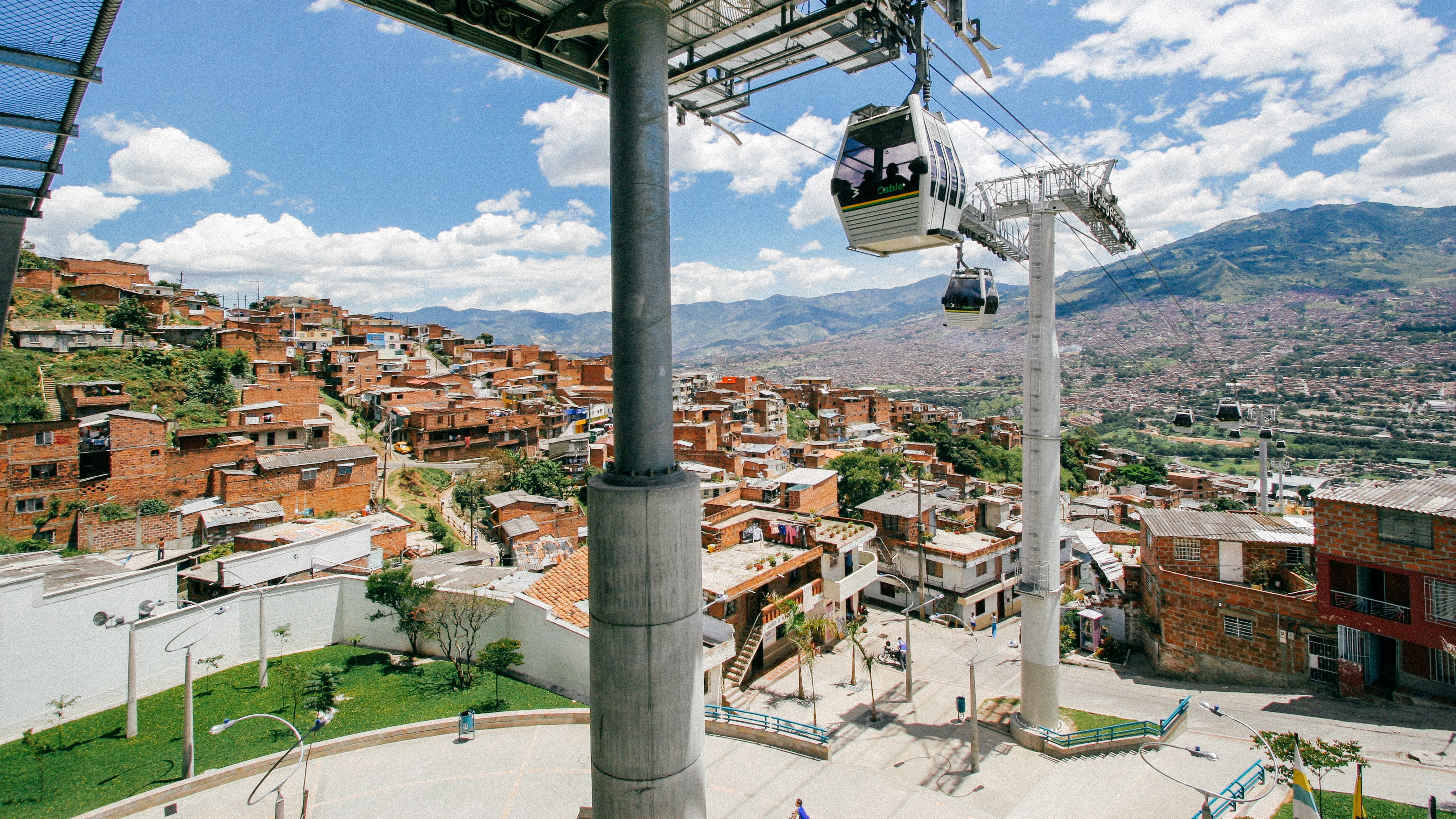
We live in a time when billions of people are moving into cities. Many of these cities, especially the new mega cities, are very dangerous and disorganised. Many of them are getting worse, and many of them are are looking for role models of cities which have transformed themselves, and no city has done as great a job as Medellín has.


For more about the Lee Kuan Yew World City Prize, click here.

Uber’s plan to get more people into fewer cars

TALK

Travis Kalanick, Ted Talk, February 2016

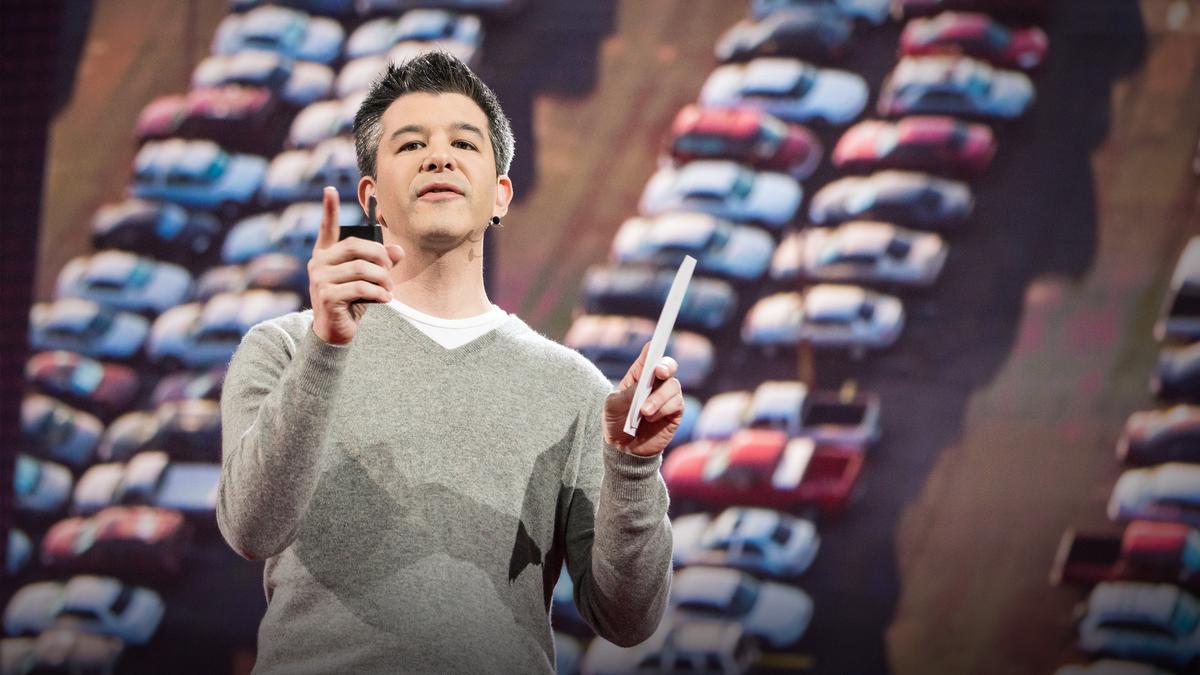
Now, in China everything is supersized, and so we’re doing 15 million uberPOOL trips per month, that’s 500,000 per day. And of course we’re seeing that exponential growth happen. In fact, we’re seeing it in LA, too. And when I talk to my team, we don’t talk about, “Hey, well, 100,000 people carpooling every week and we’re done.” How do we get that to a million? And in China, well, that could be several million.


To read Jarrett Walker‘s response in City Lab to Uber’s (and other tech “disruptors” of transportation) approach to public transport click here.

The Power Broker: Robert Moses and the Fall of New York by Robert Caro review – a landmark study

Oliver Burkeman, The Guardian, 23 Oct 2015

ARTICLE

Technically, Robert Caro’s book The Power Broker is a biography of urban planner Robert Moses, but that description feels laughably inadequate on multiple counts. For more than four decades, this particular urban planner was the most powerful man in New York, an unelected emperor who dominated the mayors and governors who were supposedly in charge, and who physically reshaped the city through sheer force of will. Caro’s enormous book, meanwhile, is less a life story than an epic, meticulously detailed study of power in general: how it’s acquired, how it’s used to change history, how it ultimately corrupts those who get it.


See also Citizen Jane: Battle for the City.

Walkscore

APP

walkscore.com

Walk Score’s mission is to promote walkable neighborhoods. Walkable neighborhoods are one of the simplest and best solutions for the environment, our health, and our economy.

4 ways to make a city more walkable

TALK

Jeff Speck, TED, October 2013

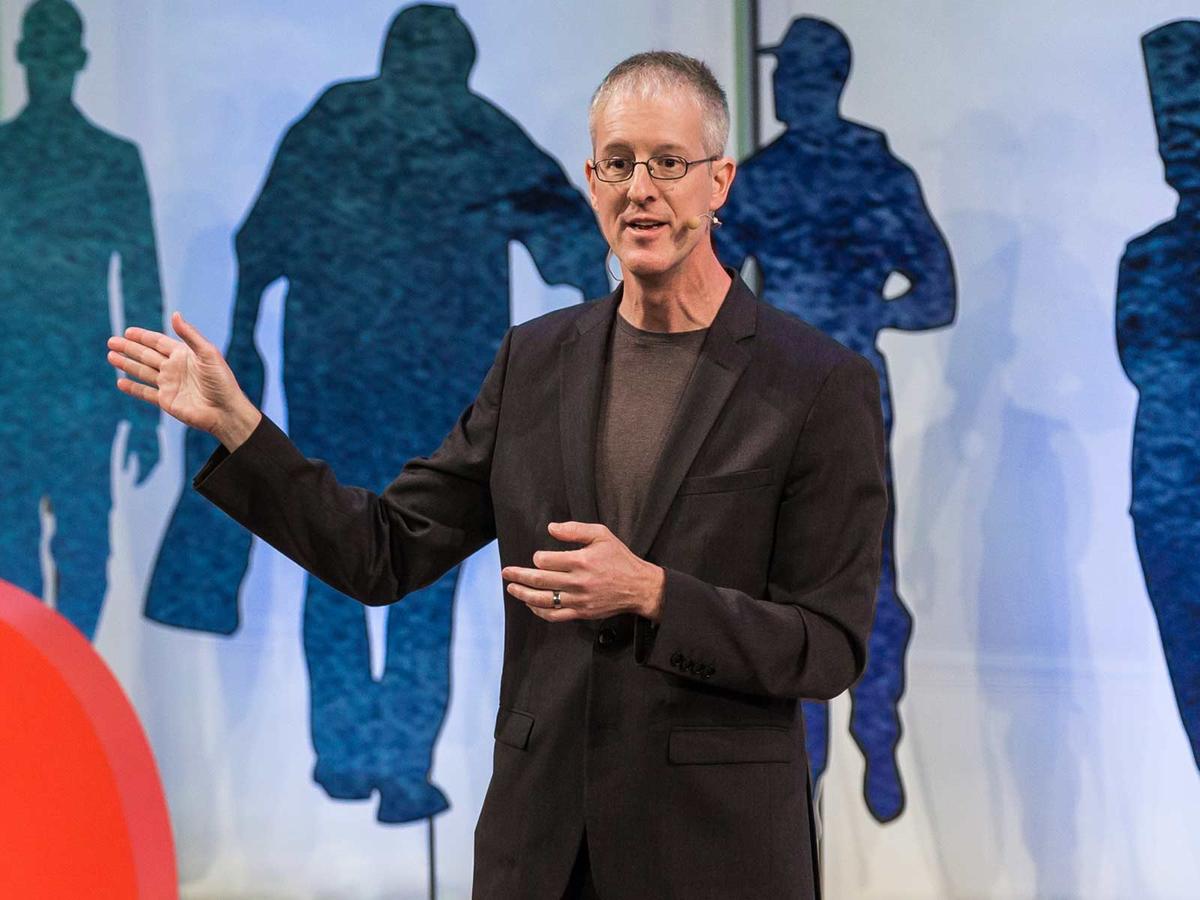
If you’re going to get them to walk, then you have to offer a walk that’s as good as a drive or better. What does that mean? It means you need to offer four things simultaneously: there needs to be a proper reason to walk, the walk has to be safe and feel safe, the walk has to be comfortable and the walk has to be interesting. You need to do all four of these things simultaneously, and that’s the structure of my talk today, to take you through each of those.


For more from Jeff Speck and his work as an advocate for walkable cities, click here.

Why buses represent democracy in action

TALK

Enrique Peñalosa, TED Talk, September 2013

Mobility in developing world cities is a very peculiar challenge, because different from health or education or housing, it tends to get worse as societies become richer. Clearly, a unsustainable model. Mobility, as most other developing country problems, is more than a matter of money or technology, is a matter of equality – equity. The great inequality in developing countries makes it difficult to see, for example, that in terms of transport, an advanced city is not one where even the poor use cars, but rather one where even the rich use public transport, or bicycles.

New York’s streets? Not so mean anymore

TALK

Janette Sadik-Khan, TED, September 2013

And so, I think that the lesson that we have from New York is that it’s possible to change your streets quickly, it’s not expensive, it can provide immediate benefits, and it can be quite popular. You just need to reimagine your streets. They’re hidden in plain sight.


To learn more about Janette Sadik-Khan’s work on streets and transportation, click here.